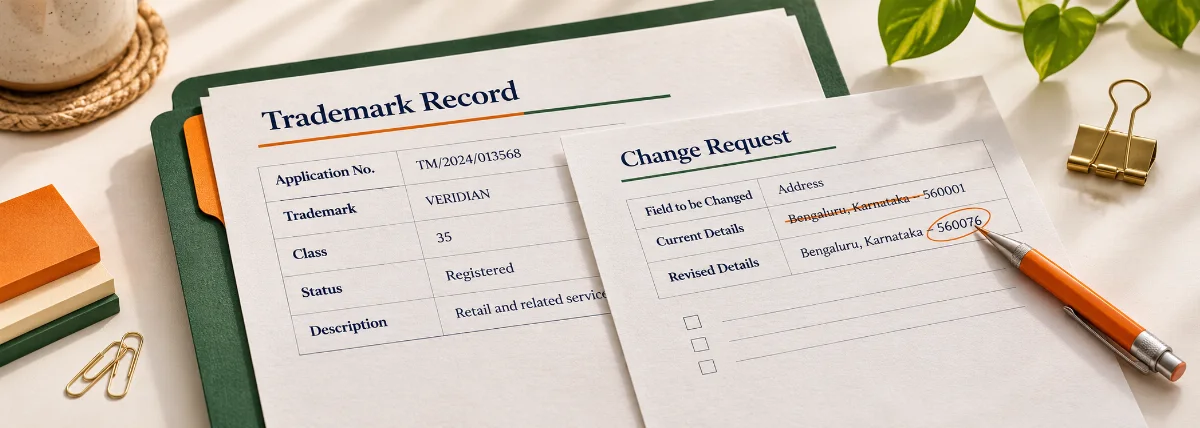
Trademark Amendment and Record Correction in India
Identify what needs to change, compare the existing and proposed entries, and prepare evidence for the appropriate trademark correction or amendment.
Identify the exact trademark record you want to change
Begin with the application or registration number and the version of the record you want to correct. A trademark amendment can concern information in a pending application or particulars for an existing registration. The stage, nature of the change and supporting evidence matter. The same words update the trademark can refer to a typographical correction, a new address, a change in the mark, a different owner or a disputed entry.
Capture the current field and the proposed wording side by side. For example, show the old and new address as complete entries and explain what happened. If the company name differs, explain whether the same legal entity has changed name or another party now owns the mark. An accurate summary gives the reviewer a starting point for determining the relevant route and documents.
Check whether the problem appears in the underlying record, in a certificate copy or in a separate business register. If an old certificate remains correct for its issue date but no longer shows the present position, you may need updated evidence rather than a change to the register. Keep record discrepancies, time-sensitive work and general housekeeping in separate lines so the team can prioritise each issue.
Distinguish correction, alteration, transfer and rectification
The correct route follows the underlying event. A mistake in existing particulars may call for correction. A change in recorded name or contact details may call for an update when the legal person remains the same. A move of title to another owner can require a transfer or transmission record. A challenge to the validity or continued presence of a registration can require rectification or related proceedings. A change to the look of an already registered mark has its own review.
State the practical outcome you need before selecting a form. A buyer who wants the record to show its ownership will need the relevant transaction and title support. A company that wants to correct its old postal code needs to explain the existing entry and produce evidence of the correct address. A competitor seeking to remove part of a registration is asking for something different from the owner fixing a minor spelling mistake.
Separate combined issues in your request. A new business address and an agreed sale of the brand may appear in the same conversation, but supporting documents and approval may relate to different actions or entities. Make a list so the reviewer can explain which items can be coordinated and how their results should be verified.
Request a correction while an application is still pending
For a pending application, start with the filing acknowledgment and the details as submitted. Record whether examination has started, whether a reply is due, and whether the mark has been advertised. A correction or amendment of the application can be considered at different stages, subject to the decision and any required conditions. The process can be affected by what has already been published.
Build the request around the exact change and its explanation. If a spelling error occurred during data entry, retain the pre-filing materials showing the correct wording. If a word or image is now different because the business chose to rebrand, explain the design decision rather than describing it as a typo. A significant difference in the mark or proposed scope may make an alternative filing strategy worth considering.
An advertised application deserves extra attention. A change can require notification or further advertisement depending on the circumstances. Discuss how this affects the matter before promising commercial partners that it will proceed on the original schedule. Include any open notice or hearing date and check which response work needs to continue in parallel.
Review updates to an existing registration
For a registered mark, first identify whether the issue concerns the proprietor particulars, another entry in the register, the specification or the registered mark itself. Different provisions address correcting an error, recording a change to name or address, striking out goods or services and applying for leave to alter a mark. Gather the certificate and a dated record of the current entry so the review starts from the present position.
Describe exactly what the owner wants the record to say afterwards. If the name or address is different, compare the proposed entry with the official materials showing that change. If the goods or services entry should be narrowed, list the wording to be retained and the wording to be struck out. A substantial change in mark identity or an extension into new goods is a different problem from maintaining an accurate existing record.
Keep the register entry separate from your public brand information. Marketing, shipping and contact teams may have updated their records already. The trademark position should still be verified independently before it is relied on in a licence, transfer or enforcement matter. Ask how the outcome will be recorded and keep the resulting evidence with the registration documents.
Check whether a company name update is a transfer
When the company name changes, compare the old and new legal names and identify the document or registration details showing continuity. A change in a trading style is different from a legal name change, so explain what happened in ordinary business terms. The affected trademark records should all be listed, even if the company has updated only its newest filing to the new name.
If the rights move from a founder to a newly incorporated company, or from one group company to another, provide the transfer instrument or legal evidence of the event. Two companies can share directors, a logo and an office while remaining different legal persons. An instruction that says update the company name should be clarified before it is submitted if the underlying proprietor is different.
Prepare a schedule of marks and the proposed proprietor wording for each one. Check any address and entity description that will also change. Retain corporate evidence, the relevant approval and an explanation of how the old and new details connect. The goal is to leave a record that a future reviewer can follow from earlier company material to the current trademark entry.
Identify which address actually needs to change
A trademark record may include a principal place of business, a proprietor address or an address for service. These details can serve different purposes. A factory move may leave the principal office unchanged. A decision to replace a representative may change where notices should go without moving the business. An update to the street number of the same premises may also need to be distinguished from relocation.
Collect the full current and proposed addresses with postal information and the effective date. Explain the function of each address and identify which field is wrong. If an address for service changes, review any open correspondence and confirm who will receive it during the switch. For an address update involving a registered user, check what notices or communications may be necessary.
If you have several registrations and pending applications, identify which records use the old address and which already show the new information. Keep the list of records approved for filing, then check the result against each record. This is important when the earlier contact remains in use for some marks or for separate matters in the portfolio.
Compare a proposed alteration with the registered mark
Show the registered mark and the proposed design side by side. State what elements have changed, such as colour, lettering, layout, a device, language or additional words. Highlight the features customers recognise. For an existing registration, an alteration may be permitted where it does not substantially affect the mark’s identity. A material redesign or replacement calls for a different strategy review.
Collect the high-quality version of each design and identify when the business began using it. A small correction to a visual detail can be assessed differently from a new emblem or a change in the dominant wording. A retailer might keep the same product name but introduce a completely different graphic. It should decide what it wants to maintain and whether the existing mark, a new application or more than one registration is appropriate.
An alteration request may involve further review and publication depending on the circumstances. Ask how that will interact with launch plans or contracts that refer to the previous design. Keep both versions of the artwork in the file and give each a date. A retailer’s packaging timeline or licensing material should then be updated using the agreed process and confirmed outcome.
Review changes to the goods or services description
Start with the goods or services wording currently on the application or registration. Identify the precise words to change and the reason. A proposed correction to a descriptive term, a decision to limit coverage and an attempt to add a new product line raise different questions. The class number is a useful reference for organising the work, but the actual wording and procedural stage need to be reviewed.
Where the business wants to remove items from a registered specification, define the scope that remains. Confirm which products, services and contracts may depend on the current description before approving a narrower entry. If a proposal depends on a negotiation or another party’s agreement, bring the relevant terms and any timing requirements. The filed wording should match the actual instruction.
For new goods or services, describe real use and planned activity in ordinary language. Compare these against the existing specification with the relevant classification in mind. A new filing may be needed instead of extending the entry through a correction request. For a pending file with several classes, identify whether the issue involves one class, multiple classes or another procedural step such as division.
Prepare the evidence for an amendment or correction
Build a short schedule with the registration or application reference, exact field, current wording, proposed wording and reason for changing it. Attach the matching evidence for each item. This can include earlier application records, corporate name change evidence, address records, dated artwork, authorisation from the proprietor or a relevant communication or order. Explain which document supports which field.
Review names, dates and identifiers before sending the material. If a document is in a former name, show how it connects to the current proprietor or applicant. If several trade marks are involved, prepare one row per entry and say whether the same evidence supports all of them. Include a full copy of any notice that prompted the change, with deadlines and supporting communication.
Preserve source versions of the documents, including the original artwork. Use clear filenames and keep a change history so anyone reviewing the matter can tell what was proposed and when. Identify incomplete items before scope confirmation. Sensitive evidence can be shared by the agreed method once the correct record and workstream are identified.
- Application or registration number and relevant classes
- Exact current and proposed particulars
- Explanation and effective date of the change
- Documents supporting the facts and signing authority
- Any open notice, advertisement, hearing or related filing
Coordinate changes with examination, renewal and open cases
Check the application or registration stage before deciding when to make the request. An examination report, hearing notice or opposition may require action even if the team is preparing a correction. An amendment request does not automatically resolve the underlying issue or suspend a relevant date. Keep a separate schedule showing each open filing and the person responsible for it.
For a registered mark close to expiry, record the renewal date and the proposed change independently. Identify whose instructions and authority are available for each task. An ownership change may involve a related recordal request, while a change of address may affect future service of notices. Discuss timing in the first review instead of waiting for a record update to appear before dealing with the imminent date.
If another party has already seen an advertised application, ask whether the proposed change affects their understanding of the mark or specification. A change may require further publication or other procedural steps. Retain the existing publication, dates and any communications so the team can evaluate the practical consequences of the proposed amendment.
Follow the change request through review and confirmation
SecureMyTM first reviews the record and what you want to achieve. Confirm the scope, route, evidence and authority before filing. Where there are several proposed changes or marks, check that the approved instructions include every reference and field. Ask how a pending application differs from a registered entry if your portfolio contains both.
After the request is submitted, retain the filing reference and the copy showing what was requested. The matter may require additional evidence, clarification or further steps connected with publication or a hearing. Keep a single version of the correspondence and link it to the original request so the team can respond accurately if a new issue appears. Do not rely on an internal approval or payment receipt as proof of an approved change.
On completion, compare the result with the approved before-and-after schedule. Save the official communication or updated record and note any remaining issues. If an amended certificate, additional certified evidence or separate ownership change is still needed, leave that work visible as another task with its own scope and assigned owner.
What affects the price of trademark amendment support
Ask for the quote to identify the number of applications or registrations and the exact fields affected. A clerical correction supported by a simple record differs from a batch proprietor update, an alteration involving artwork or a disputed question. The budget may depend on checking earlier documents, preparing a request, applicable fees and addressing issues raised after submission.
Clarify what the service includes before approving it. Ask whether the work covers comparing records, preparing a schedule, obtaining supporting evidence, submission, and checking that the result is recorded. A related transfer, certified copy request or renewal may require separate scope. If a new mark or expanded goods and services calls for a new application, make sure the team treats that work as a separate filing decision rather than a change to the old entry.
Where a service card offers current pricing, match it to the actual work and affected records. For a portfolio or unusual case, send a marks list and request a quote. Keep the agreed estimate with the supporting papers so finance and the trademark team can verify what they approved when later changes are discussed.
Choose the right first step in three example cases
A software business has a new main office and still uses the same owner and word mark. Its application points to a former address for service while the registration file shows the old proprietor address. The team separates the address fields, records which case references are affected and confirms who will receive notices during the changeover.
A consumer goods brand replaces a dated badge with a new design and a modified name. The team obtains the current registered representation and places it beside the launch artwork. It asks whether the differences affect the identity of the mark and whether a new filing should be considered. It then plans the brand launch and trademark work as separate events with different approvals.
A founder intends to put a mark into a new company and describes the request as a name update. Review establishes that the entities are different. The team looks at title-transfer documents and any approaching renewal before proceeding. Keeping these situations separate helps SecureMyTM identify the correct scope when reviewing your record.
Protect the rest of the record after an update
Review the updated entry using the exact reference, proprietor and classes originally identified. Confirm that the corrected field reads as intended and that no unrelated information was assumed to have changed. Record the date of the decision and, where relevant, the effective date of the underlying event. Attach a dated copy of the new record to the approved schedule.
Share the result with the people who need it. An address for service update matters to anyone watching incoming notices. An owner name change can affect finance, brand licensing and contract material. A corrected artwork or specification may need to be recorded in product and brand inventories. Keep older copies labelled by date rather than overwriting them, particularly if they are relevant to earlier use or a live dispute.
Check whether a certificate or certified record now needs to be obtained and whether any other entries still show the former details. For a portfolio, report the marks completed and the marks left open. Maintain one tracker for deadlines, decisions and outstanding records so future renewals or assignments start from accurate information.
Tell SecureMyTM what you want to change
Send the application or registration number, mark, proprietor and classes. Identify the exact field now displayed and the proposed change, and say why it is needed. If possible, share the effective date and describe which records support it. Tell us whether the underlying owner has changed or if this is an update to the same party’s particulars.
Flag any examination notice, impending renewal, publication, licence or transaction deadline. For several marks, list each record and the specific action you want. If the original record is missing, provide enough identifiers to locate it, including historical names and any previous correspondence. A clear explanation helps distinguish the work required from a broader business change.
Keep the enquiry reference and use the agreed channel for sensitive documents after the review scope is identified. Before the request is filed, check the full list of records, proposed wording, authority and expected follow-up. After filing, keep the acknowledgment and verify the recorded outcome before using the corrected entry in contracts, brand material or a later trademark filing.